

Popeye traditionally got his hit of power packed spinach from a can, but I prefer mine fresh. Unfortunately, in sub-tropical Australia the summers are simply too hot for spinach, silverbeet (chard) and most other leafy greens.
Enter the sprawling, scrambling and climbing leafy greens that get used like spinach around the world.
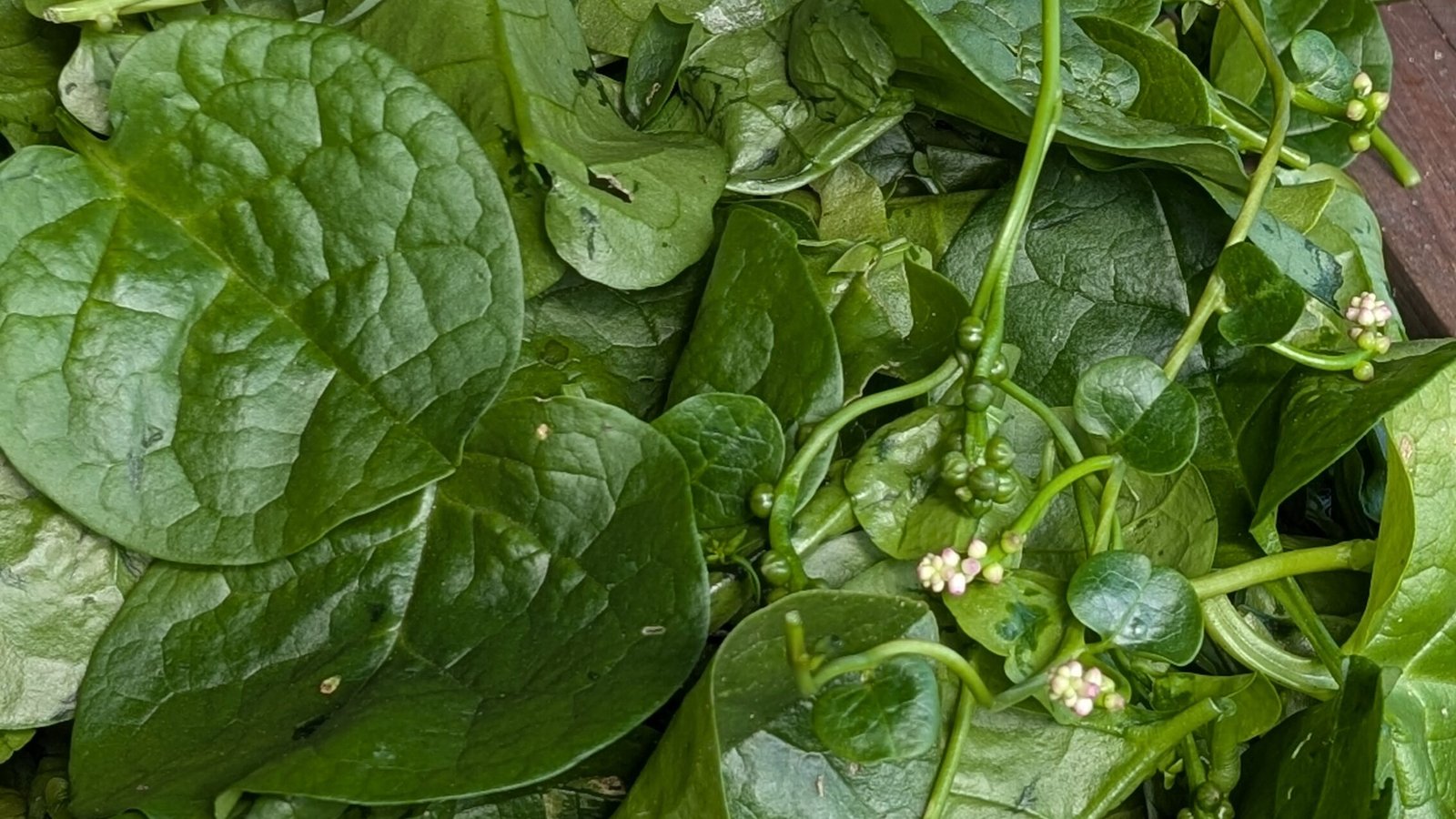
We have spent a bit of time discussing Malabar spinach in What is this thing called Malabar Spinach. It is the easiest to grow of the sub-tropical spinaches. So we have also covered its many uses and preparation in Making the most of Malabar spinach The feedback on that story indicates that most people did not like the sliminess of the plant, even when taking the precaution of preparing it with acid in the form of lemon juice or vinegar. We are experimenting with a Vietnamese soup that might earn broader appeal.
There are two other spinach substitutes that we are growing but have yet to master in the kitchen.
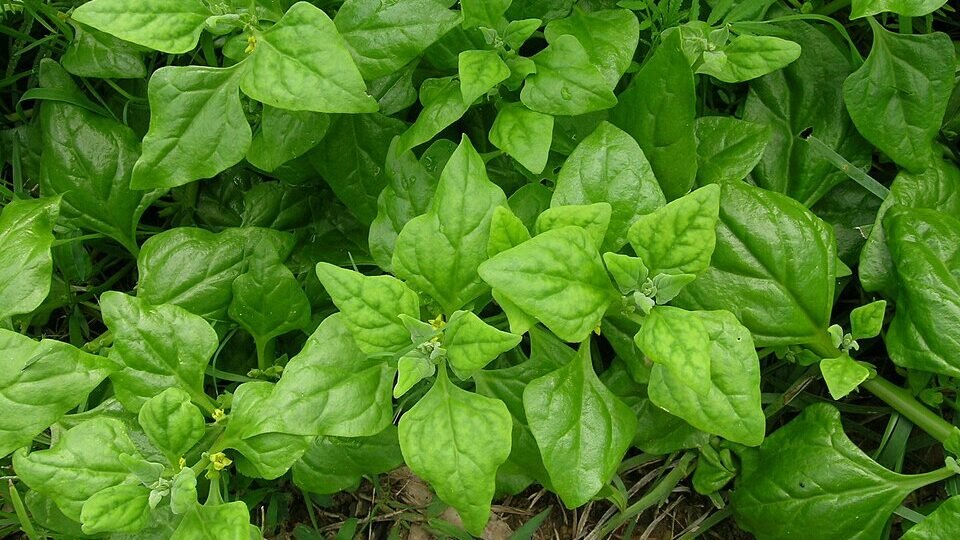
Perhaps the most familiar to European readers is the Australian native Warrigal Greens, also known as French Spinach and New Zealand Spinach (Tétragone cornue). The Latin name comes from its triangular leaves and the French call it Summer Spinach. Its association with France stems from the eighteenth century explorers – Baudin, Lapérouse, and Freycinet – who spent some time discussing cuisine with the First Australians while the British were busy with the American Revolution. The leaves are generally more grey than shown here, salty and firmer than either English Spinach or the Malabar variety shown above. Warrigal Greens grow wild in sheltered coastal areas of Australia and New Zealand. They are often found in marshy areas, so enjoy moist areas of the garden and form a scrambling vine.
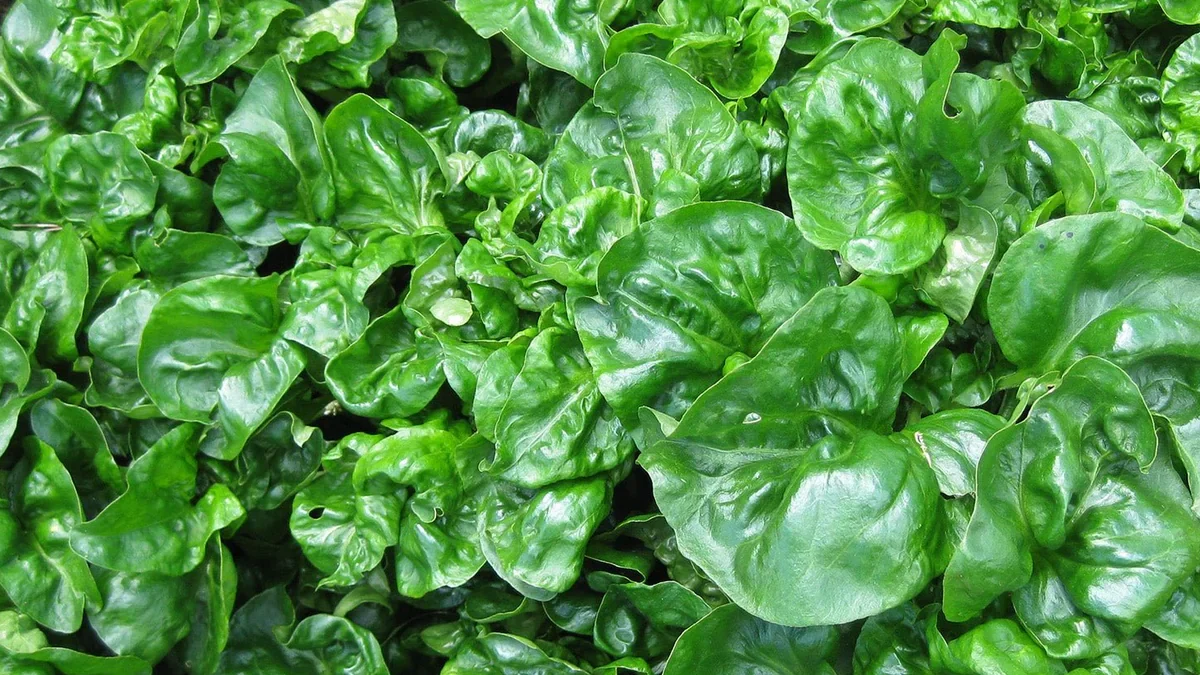
Brazilian Spinach, Wet Season Spinach or Sissoo Spinach (Alternanthera sissoo) has crinkled leaves, is easy to grow and does not turn slimy upon cooking. It forms a mound rather than sprawling or climbing – so does not take over the garden – and survives sun and rain. From a gardener’s point of view, this one ticks all the boxes. It is not so popular in our test kitchen. Uncooked, it is a little chewy and so is generally used in stir fries and soups rather than salads. It does not have a great deal of taste, either, so really works best when you have nothing else. That’s probably why it is sometimes called Poorman’s Spinach.
Pingback: Making the most of Malabar spinach – Your Life, Your Planet
Pingback: What is this thing called Malabar Spinach? – Your Life, Your Planet