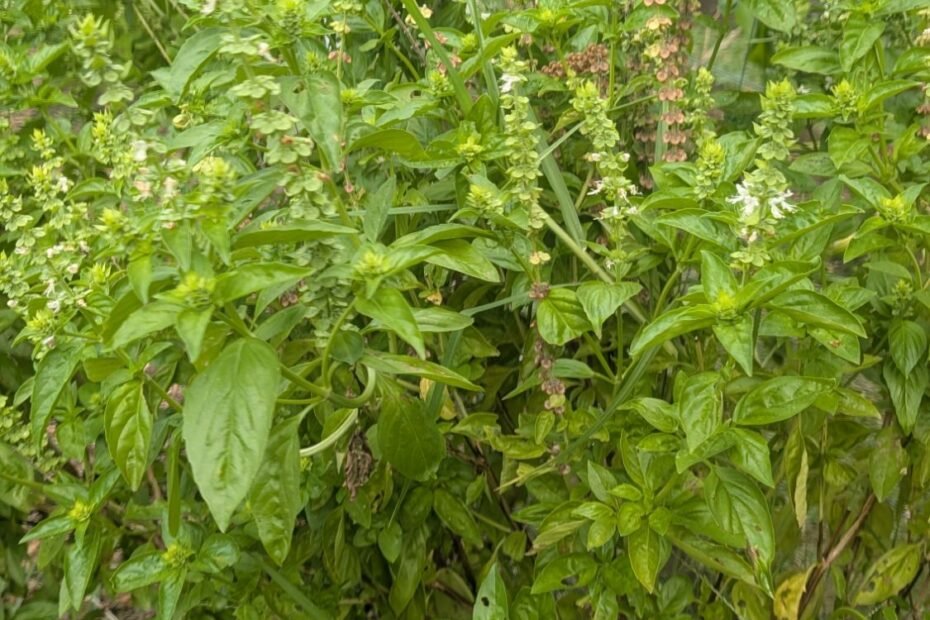
We grow lots of basil in our community garden. Most of it is Sweet Basil, aka Royal Basil, or Ocimum basilicum because of the rich tasty leaves that make the perfect pesto. We plant that all spring long but in the full heat of summer it’s white flowers go to seed very quickly. Whenever we run out of Sweet Basil, we go to its tall woody cousin, Tree Basil, African Basil (sometimes mistakenly called Holy Basil) that grows forever and needs to be pruned hard, at least once a year. Its taste is not as fresh and clear but it’s definitely basil and it makes a pretty good pesto, especially if you are not being a purist about parmesan cheese, pine nuts, and olive oil.
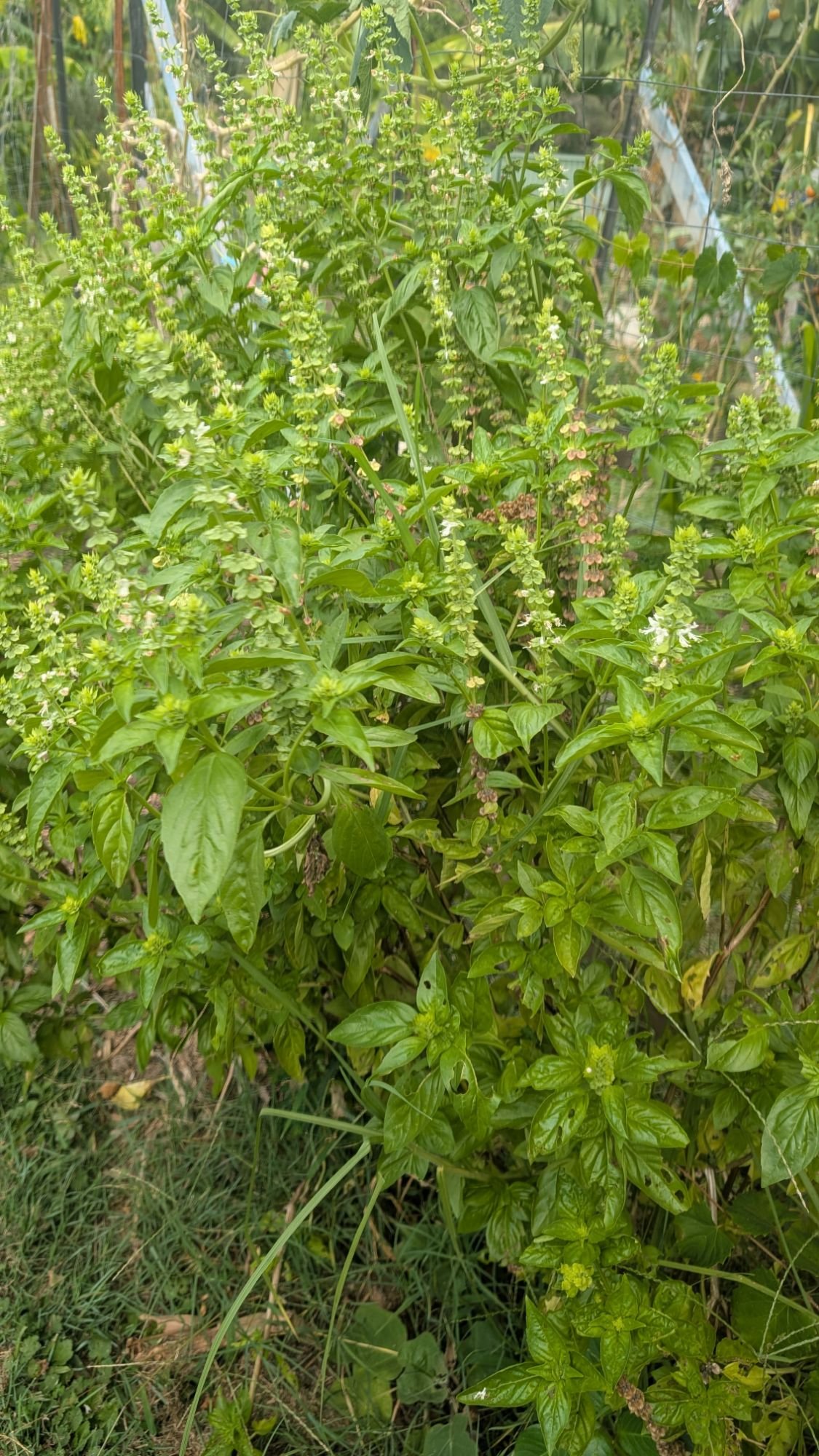
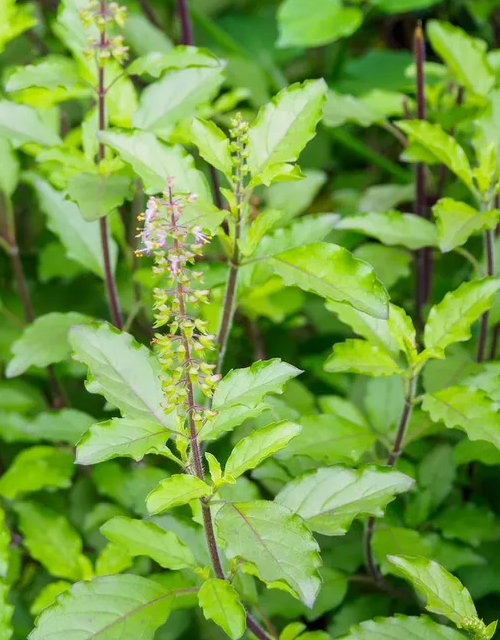
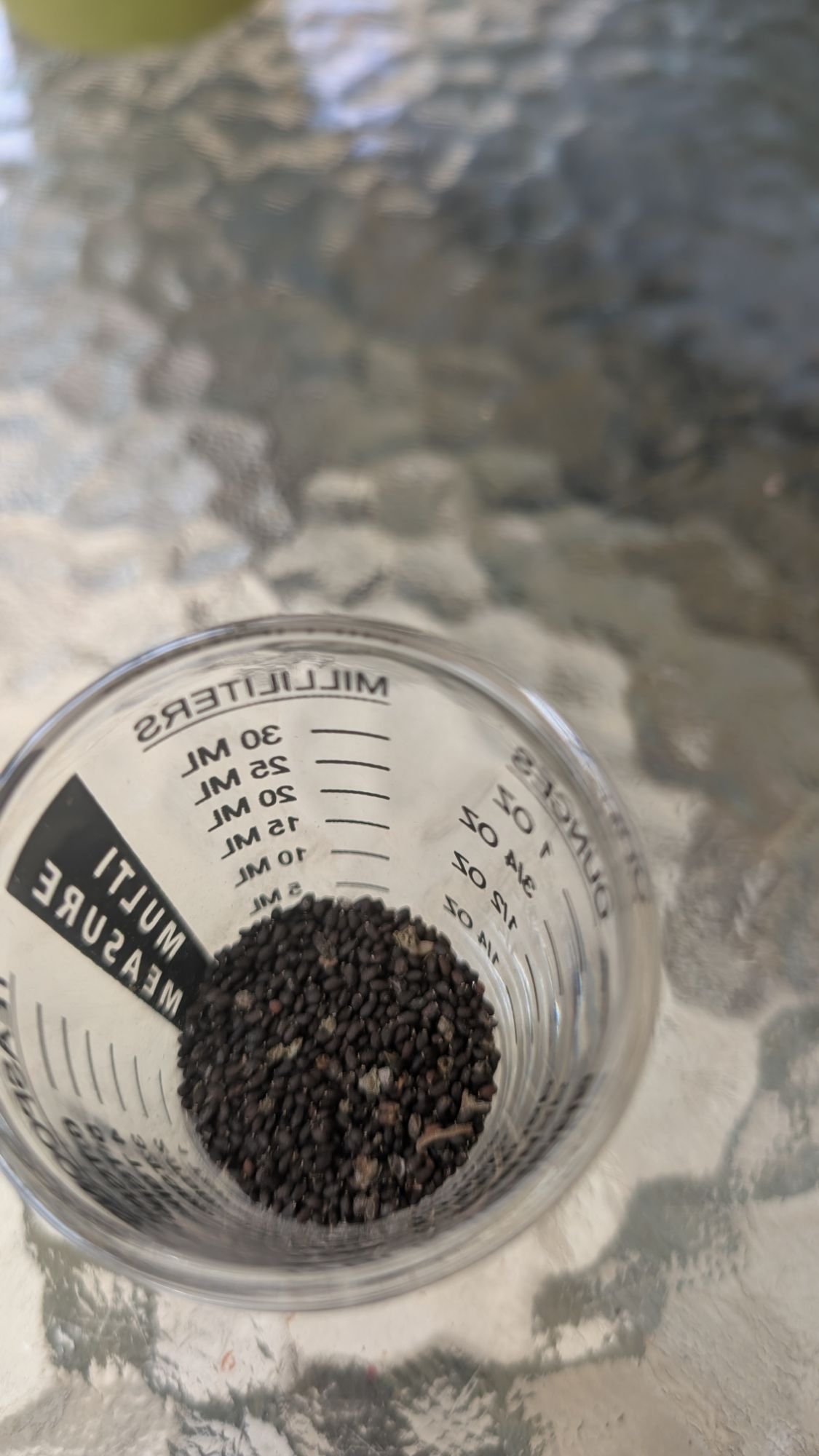
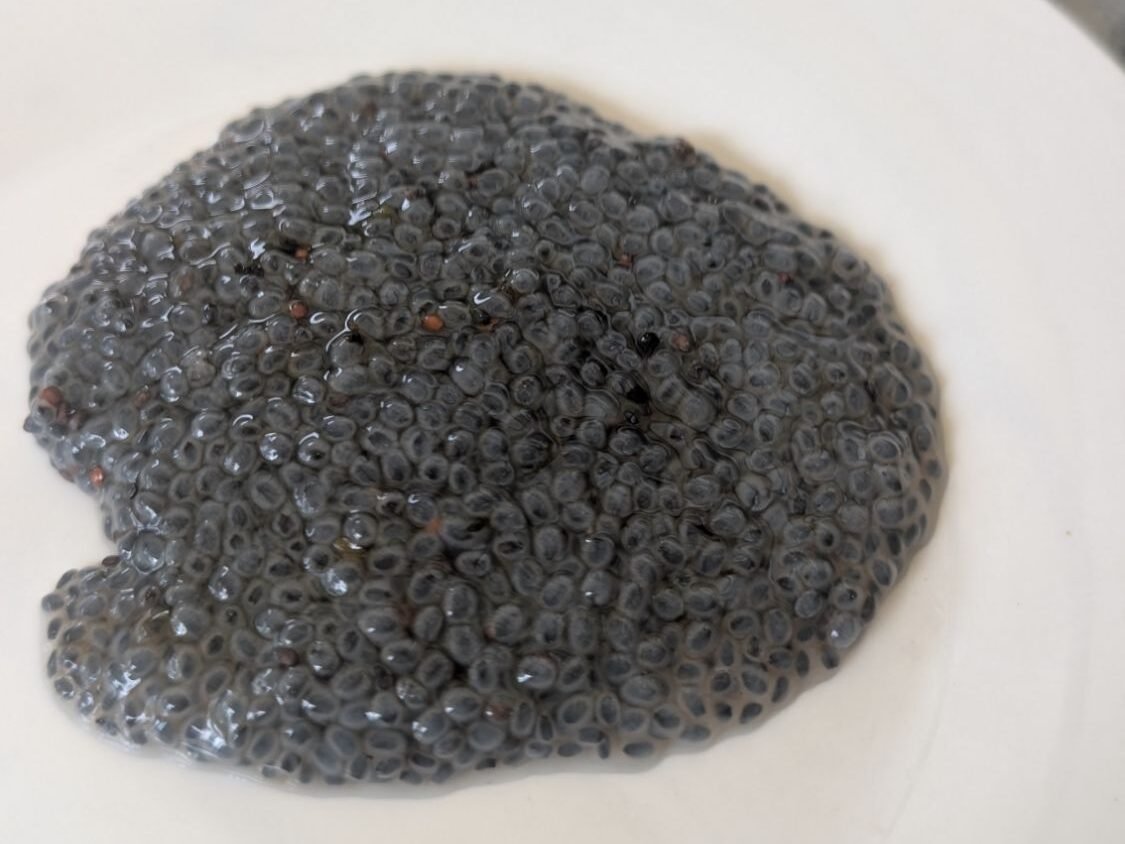
I used to remove the flowers and seeds in an attempt to keep it producing leaves, but since I discovered Tukmaria, aka Sabja, I let it go to seed and harvest them as they dry. That way I end up with lots of basil seed that I use to make a nutritious jelly to go with my fruit salad. My tulsi plant (Ocimum tenuiflorum aka Ocimum Sanctum) is not big enough to eat the leaves but it flowers like crazy all summer long, so I keep the seeds from that too. Basil is in the same family as mint, which explains the fragrant, volatile oils but does not spread underground in the same way, so the seeds are the main way to propagate Basil. I keep the seeds of all the basils seperate for next year’s crop.
I mix up the seeds with dried fruit in a plastic tub, filling it to about one quarter full, pour boiling water over it and then stir it and let it sit for ten minutes. I end up with a sweet, nutritious jelly that is perfect with fruit salad, and keeps me going for an extra hour or so that pure fruit on its own. If you eat it on its own, the seeds are crunchy in the middle of the jelly and the taste of basil is still strong.
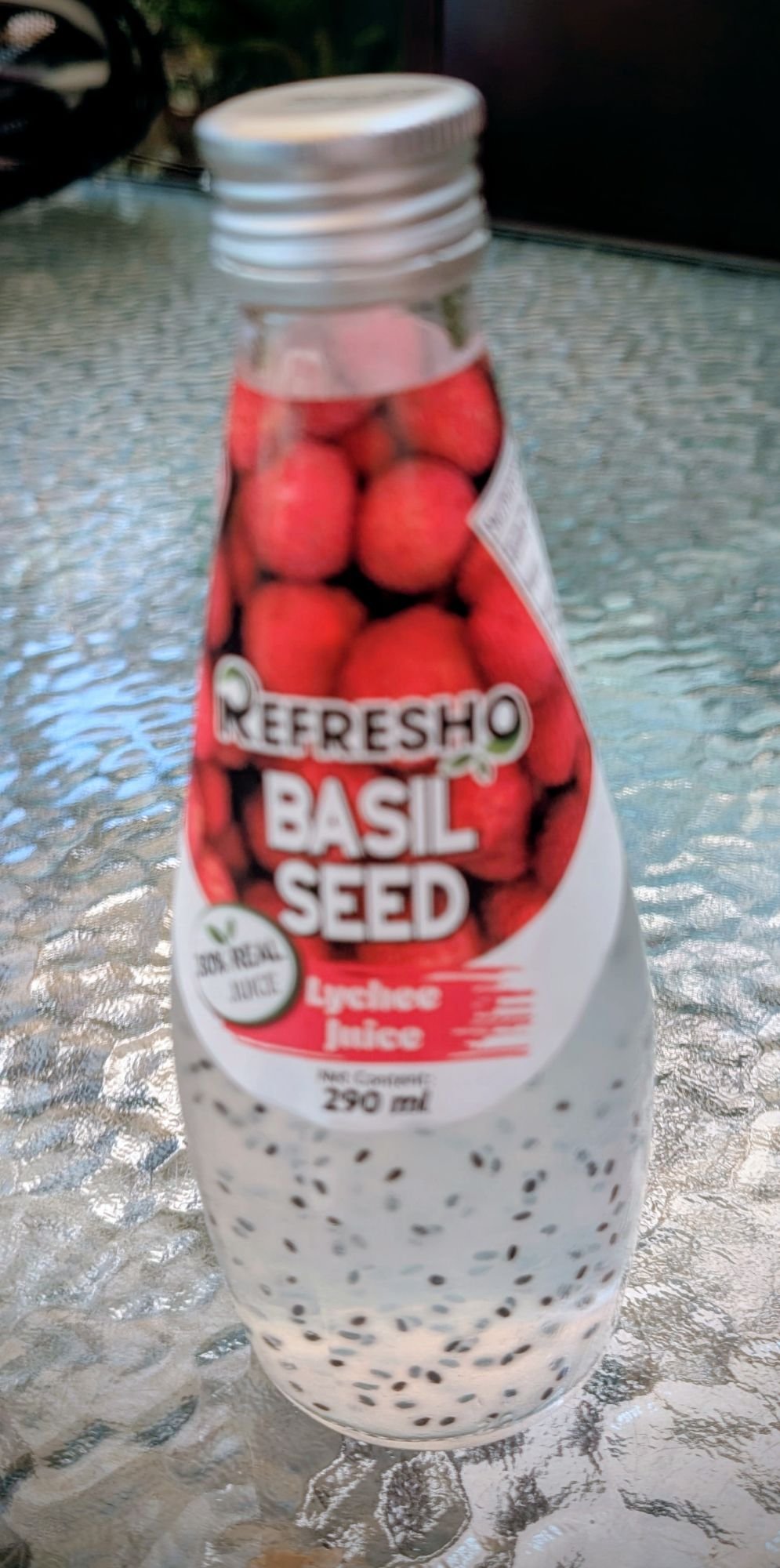
The day after originally posting this my local butcher had just loaded drinks from his home country into the fridge. He said most families soak a small amount of seed overnight for use in cool drinks the next day. I’ll be adding them to my iced tea.
Basil seeds (Tukmaria) work just like Chia. They do not have as much protein and only about half the calories overall, but they have nearly three times as much calcium and lots of iron. Chia makes a stronger jelly, but Basil jells more quickly. Linseed, which are actually flax seeds, also form a jelly and I often use them in my fruit salad porridge. Some people say it is safer to use ground linseed as the seeds have very sharp edges. Other seeds that are mucilaginous (form mucus like goo in water) include okra (Abelmoschus esculentus), garden cress (Lepidium sativum), water cress (Nasturtium officinale), mustard (Brassica juncea/nigra), fenugreek (Trigonella foenum-graecum), and rocket (Eruca sativa). Despite the Latin name, watercress is a member of the mustard family. The botanical books say the seeds are not mucilaginous but the cookery books say they are. Stay tuned until we do the experiment. The Latin name of garden nasturtiums is (Tropaeolum majus) and the leaves have a peppery flavour but the seeds are not mucilaginous – I have tested that.